When Elizabeth was ten
John’s Suicide
Elizabeth's brother [John](entity:character-recall-character-john-6bc68dc682c3) committed suicide. As a child, she had been encouraged by John to jump into a quarry's water pit; at that time, she could not swim. John then jumped in to rescue her, and she has always felt that she had lived at the cost of his life. This
Before her career at Hastings
Elizabeth’s Expulsion from Graduate Study
At the [University of California, Los Angeles](entity:organization-recall-organization-d758ef5e1ffc), Elizabeth's thesis advisor, Dr. Myers, sexually assaulted her. After that, she was forced to leave the doctoral program, losing her opportunity to complete her doctorate, as her scientific talent was sufficient to earn the degree. This experience later deepened her
Before Calvin’s childhood
Avery’s Forced Separation
At seventeen, Avery Park became pregnant with the child of the young man she loved. Her prestigious parents sent her to an unmarried mother's home run by the [Catholic Church](entity:organization-recall-organization-ba391efc867a), where the women were forced to give up their children. Avery refused to sign the documents to give up her child. After giving birth
Calvin’s childhood
Calvin’s Early Losses
Calvin's biological father died of tuberculosis before his birth. Later, his adoptive parents died in an accident, and his aunt who took him in also died after hitting a tree, leaving him without a stable family. These successive losses help explain why Elizabeth later fell in love with a man who was
When Calvin was about ten
The All Saints Deception
Avery sent her representative [Parker Foundation](entity:organization-recall-organization-parker-foundatio-845497850096) representative [Wilson](entity:character-recall-character-wilson-f3c5c1c7701e) to St. Nicholas Boys Home to look for Calvin and bring him to her side. The bishop was more concerned about the institution's finances than about uniting the mother and child, so he lied and said Calvin had already died, and also created a memorial
During their student years
Calvin and Wakely’s Letters
After the first scientific conference, Calvin began correspondence with Reverend Wackley, discussing whether science and religion could coexist. As they discovered they both enjoyed water sports and clear weather, the content of their correspondence gradually became more personal
After Cambridge
Calvin Chooses Commons
Calvin received generous job offers from a university and a company, but after Wackley praised the weather in Communes, California, Calvin accepted a low-paying position at the Hastings Institute. When Calvin made his choice, he also considered the local rowing club and the climate. This decision brought him
Before their years together at Hastings
Elizabeth and Calvin Meet
Elizabeth's first meeting with Calvin was purely accidental, yet unforgettable: Calvin spat in her face in the theater lobby. Their feelings arose from mutual respect and attraction based on intellectual grounds, rather than the traditional courtship expected by others. They became companions in life and science. Calvin took Elizabeth's research seriously
In the years before Calvin’s death
The Leash and the Run
Elizabeth bought a leash for six thirty and thought tying the dog would be safer. Calvin did not like running indoors and insisted on running outdoors in the rain
A rainy morning before Chapter 12
Calvin’s Fatal Accident
when the police surrounded injured calvin, he weakly asked if it was half past six. half past six watched nearby, also injured, unable to approach his partner, while calvin's breathing gradually stopped. the ambulance covered calvin with a sheet and took him away, the broken rope still wrapped
Immediately after Calvin’s death
Elizabeth’s First Days of Grief
Elizabeth could not accept that Calvin was already dead. She lay in bed at half past six, almost not eating or sleeping; the phone call from the mortuary forced her to face the arrangements for the funeral
The days after Calvin’s death
The Wrong Funeral Suit
Calvin had no suit. Elizabeth brought his rowing suit to the mortuary, believing that was the clothing he would choose to wear to his funeral. However, the staff threw the clothes away and replaced his body with a dusty, ill-fitting suit. The mortuary also charged Elizabeth for the
Several days after Calvin’s death
Calvin’s Funeral
At calvin's funeral, rowers, a journalist, and employees from hastings institute came, some of whom secretly celebrated his death. Elizabeth stood far away, afraid that if she approached closely, she would fall into the coffin
At the end of Calvin’s funeral
Elizabeth Leaves the Funeral
When the first handful of soil fell on the coffin, Elizabeth said she needed to walk around, then left the cemetery at half past six. She walked six miles home in high heels, and the funeral car followed her all the way, begging her to get in. The spring flowers around made the person
Nine days after Calvin made the sandwich
The Diamond in the Lunchbox
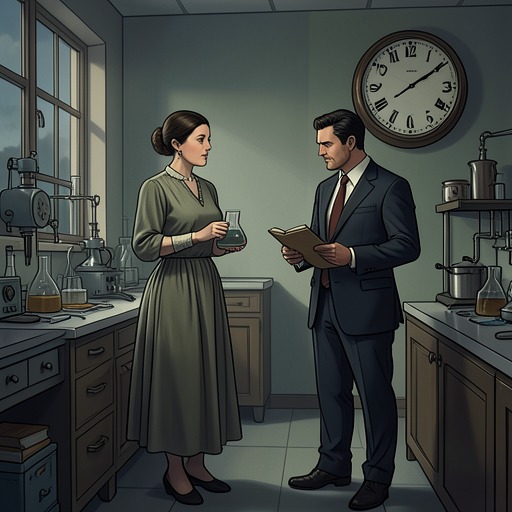
Elizabeth returned to Calvin's laboratory and found his notebook missing, the research materials locked up, and his personal belongings reduced to just one box. His lunchbox still contained a sandwich she had made nine days earlier
At Elizabeth’s visit to Calvin’s lab
Frask Reveals the Pregnancy
[Miss Frask](entity:character-recall-character-miss-frask-9cd9ebc2958e) told Elizabeth that Hastings would not recognize her as Calvin’s family and that the institute had secured his work. She also delivered the office gossip about their unmarried relationship with careless confidence.
When Elizabeth became sick, Frask realized she was pregnant. The discovery transformed Elizabeth’s shock into a new, unwanted crisis, even as she still held Calvin’s diamond in her fist.
The week after Calvin’s funeral
Hastings Plans to Dismiss Elizabeth
Hastings management feared that Calvin’s death and a critical newspaper story would unsettle funders. They also worried that the wealthy investor who had backed abiogenesis would object to discovering that the supposed Mr. Zott was a woman.
When management learned Elizabeth was pregnant and unmarried, they decided to remove her despite recognizing that she was a rare scientific innovator and central to the project.
After Frask leaves the laboratory
The Diamond’s Meaning
[Miss Frask](entity:character-recall-character-miss-frask-9cd9ebc2958e)’s comments and the sight of the cold ring made Elizabeth retch. Frask assumed the pregnancy was an inevitable consequence of Elizabeth’s relationship with Calvin, though Elizabeth and Calvin had taken precautions and did not want children.
The diamond became a private reminder of Calvin’s love and the future they had not expected to face together.
About a week after Calvin’s death
Hastings Fires Elizabeth
[Dr. Donatti](entity:character-recall-character-dr-donatti-d4e970047f8d) and [Miss Frask](entity:character-recall-character-miss-frask-9cd9ebc2958e) told Elizabeth she was being fired because she was pregnant and unmarried. Elizabeth challenged them to explain why the man responsible would face no consequence, and pointed out that their written employee rules did not forbid her situation.
Donatti invoked an unwritten rule and Calvin’s supposed shame. Elizabeth refused to sign away her dignity, but was ordered to leave by noon, with her salary and benefits ending almost immediately.
Immediately after Elizabeth’s dismissal
Management Loses Its Innovator
Hastings management recognized that Elizabeth’s project could not advance without her, while the other researchers could not reproduce or explain her work. [Dr. Boryweitz](entity:character-recall-character-dr-boryweitz-01a0e6b85229)’s claims to have led the research only confirmed his limitations.
Although the institute’s leaders had dismissed Elizabeth for being pregnant, they still needed her science to satisfy investors. Their decision exposed the gap between Hastings’ stated devotion to research and its treatment of women scientists.
The weeks after Calvin’s death
Six-Thirty at Calvin’s Grave
[Six-Thirty](entity:character-recall-character-six-thirty-4c3ec6f80713) began visiting Calvin’s grave, slipping into the cemetery despite its dog ban. The damaged inscription read, “Your days are numbered,” rather than the full Marcus Aurelius quotation Calvin had intended.
As Elizabeth taught Six-Thirty words and object names, he tried to communicate with Calvin beneath the ground and with the child growing inside Elizabeth. The dog’s devotion became a quiet form of care for both of them.
The months after Calvin’s death
Elizabeth Builds a Home Lab
At two in the morning, Elizabeth began demolishing the kitchen cupboards with a sledgehammer. She planned to replace the domestic room with shelves, work surfaces, a centrifuge, and the equipment needed to continue scientific work.
Over several months, she built a functional laboratory with salvaged and secondhand materials. [Six-Thirty](entity:character-recall-character-six-thirty-4c3ec6f80713) helped identify tools and materials as Elizabeth turned grief into a project that kept her connected to her work.
After Elizabeth’s dismissal
Freelance Chemistry
Former Hastings colleagues began visiting Elizabeth to ask for help interpreting results. At first they called it a quick favor; she soon began charging them, with higher rates for remarks about Calvin or her pregnancy.
The arrangement gave her some income while revealing how routinely her expertise had been used without credit. Even outside Hastings, she remained the scientist others depended on but did not formally recognize.
About three months after Calvin’s death
Six-Thirty Saves the Caretaker
When a cemetery groundskeeper pointed a rifle at [Six-Thirty](entity:character-recall-character-six-thirty-4c3ec6f80713), the dog lunged and knocked him down. Seeing blood, Six-Thirty resisted the urge to bite and instead pressed against the man’s head to slow the bleeding, barking until help arrived.
The reporter from Calvin’s funeral carried Six-Thirty home and turned the rescue into a newspaper story. The cemetery lifted its dog ban, and a bullet damaged [Calvin’s tombstone](entity:object-recall-object-calvin-s-tombstone-4962330f1c0d), leaving only fragments of its inscription visible.
After the cemetery shooting
A New Message on the Stone
Reading the damaged tombstone in the newspaper, Elizabeth noticed the remaining letters “Your days are nu.” They reminded her of Calvin’s childhood mantra: every day was new.
The discovery gave her a clue to Calvin’s history and offered a small opening through which memory could become something other than blame.
Late in her pregnancy
Elizabeth Visits Dr. Mason
After enduring strangers’ unsolicited remarks about pregnancy, Elizabeth visited [Dr. Mason](entity:character-recall-character-dr-mason-22b2e2685bde), a fellow rower who had once shared a boat with her and Calvin. He confirmed that the baby was healthy and acknowledged how difficult Elizabeth’s circumstances were.
Elizabeth admitted she had not planned to become a mother and had sometimes hoped the pregnancy would end on its own. Mason did not shame her; he told her that not every woman wants to be a mother and encouraged her to return to rowing when she could.
About five weeks after the appointment with Dr. Mason
Madeline Is Born
Elizabeth’s labor began while she and [Six-Thirty](entity:character-recall-character-six-thirty-4c3ec6f80713) were walking to the library. She had mistaken the signs for hunger and ordinary discomfort, but Six-Thirty recognized what was happening before she did.
After thirteen hours of labor, Elizabeth gave birth to a girl without anesthesia. Worried about Six-Thirty, she left the hospital the next morning and brought the baby home to the dog waiting outside.
The morning after Madeline’s birth
The Family’s New Name
Elizabeth told [Six-Thirty](entity:character-recall-character-six-thirty-4c3ec6f80713) the baby was a girl and, checking her watch, said it was 9:22. Six-Thirty understood the clock-based family tradition and welcomed the newborn as Nine Twenty-Two.
The moment of greeting briefly made the house feel whole again. The baby’s persistent crying soon shattered that calm, beginning the exhausting reality of Elizabeth’s new life as a mother.
Madeline’s first weeks at home
Harriet Helps Elizabeth
[Harriet Sloane](entity:character-recall-character-harriet-sloane-3adfe1f43a5a), Elizabeth’s neighbor, found Elizabeth asleep on the floor while the newborn cried. She changed [Madeline](entity:character-recall-character-madeline-9a422b2cfd81), made coffee in Elizabeth’s improvised laboratory, and offered practical help without pretending that new motherhood was blissful.
Elizabeth confessed that she felt like a terrible mother and had considered giving the baby away. Harriet reassured her that such desperate thoughts did not make her a failure and urged her to take a moment for herself every day.
The weeks after the birth
Mad Becomes Madeline
Elizabeth discovered that the exhausted, angry answer she had given a nurse had been recorded as her daughter’s legal name: Mad. She tried several alternatives, but [Madeline](entity:character-recall-character-madeline-9a422b2cfd81) was the name that made the baby open her eyes.
[Six-Thirty](entity:character-recall-character-six-thirty-4c3ec6f80713) connected the name to the madeleine in Proust, and Elizabeth adopted it, though the birth certificate still legally named the child Mad. The misnaming later became both a joke and a sign of the family’s unconventional beginnings.
When Madeline was almost four
Madeline Starts Kindergarten
Elizabeth enrolled [Madeline](entity:character-recall-character-madeline-9a422b2cfd81) in kindergarten despite the age requirement. Her decision reflected both her belief that Mad needed other children and the family’s financial desperation: Elizabeth had taken a reverse mortgage and needed work that paid reliably.
To satisfy the school’s rule, Elizabeth altered the birth certificate using her knowledge of ballpoint ink. [Six-Thirty](entity:character-recall-character-six-thirty-4c3ec6f80713) worried that the child would be away from his protection, while Harriet feared losing the daily role she had grown to cherish.
After Madeline begins school
Elizabeth Returns to Hastings
Facing financial pressure, Elizabeth returned to [Hastings Research Institute](entity:location-recall-location-hastings-research-in-3f7c69cd07a8). She was relieved that the call came from [Miss Frask](entity:character-recall-character-miss-frask-9cd9ebc2958e), not the former personnel staff who had helped force her out, but the return still meant entering a workplace that had wronged her.
[Dr. Donatti](entity:character-recall-character-dr-donatti-d4e970047f8d) welcomed her back because a wealthy investor had returned and wanted progress on abiogenesis. Elizabeth hoped to resume research, while Harriet warned that going back to Hastings was a mistake.
Elizabeth’s first days back at Hastings
The E.Z. Lab Coat
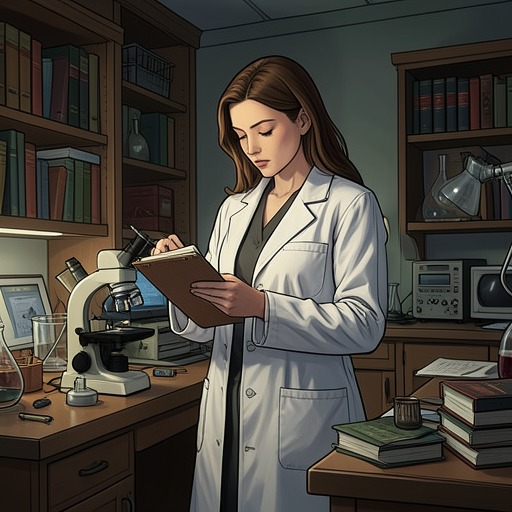
The Chemistry Department presented Elizabeth with a lab coat embroidered only with “E.Z.” rather than her name. [Dr. Donatti](entity:character-recall-character-dr-donatti-d4e970047f8d) then assigned her typing, coffee-making, and support work, calling her a lab technician instead of restoring her scientific position.
He offered to pay for stenography training rather than the PhD she had hoped to pursue. Elizabeth understood that Hastings was using her work while denying her the status and salary of a chemist.
Soon after Elizabeth’s return to Hastings
Frask and Elizabeth Confront Their Past
Elizabeth encountered [Miss Frask](entity:character-recall-character-miss-frask-9cd9ebc2958e) in the women’s restroom and confronted her about spreading rumors and helping to punish women who challenged male authority. Their argument brought out the truth that both had been sexually assaulted by thesis advisors and denied the chance to finish their doctorates.
The revelation did not erase their conflict, but it shifted their relationship from simple antagonism toward an uneasy understanding. They had both been harmed by the same institutional structure, even though Frask had once helped enforce it.
Two months into Elizabeth’s return
Frask Retrieves Calvin’s Files
After learning she was being fired for gaining weight, [Miss Frask](entity:character-recall-character-miss-frask-9cd9ebc2958e) decided to give Elizabeth a parting gift. She took her to a locked storage room in Hastings’ basement, where Calvin’s personal effects and research had been boxed and sealed.
Elizabeth loaded eight boxes into her car with Frask’s help. The archive contained the notebooks and papers she needed to understand Calvin’s work and the history that had been hidden from her.
Two months after Elizabeth returns to Hastings
Donatti Steals Elizabeth’s Research
Elizabeth discovered that [Dr. Donatti](entity:character-recall-character-dr-donatti-d4e970047f8d) had published research copied from her files, listing [Dr. Boryweitz](entity:character-recall-character-dr-boryweitz-01a0e6b85229) as a contributor. Boryweitz admitted that Donatti had copied her material and that he himself had accepted credit because he needed his job.
Elizabeth confronted Donatti, who treated the theft as an ordinary workplace dispute. She resigned on the spot, choosing to lose her position rather than let the institution keep exploiting her work without recognition.
After Elizabeth resigns from Hastings
Walter Offers a Television Job
[Walter Pine](entity:character-recall-character-walter-pine-2eb5be4897f1), a television producer, offered Elizabeth a hosting job for a new afternoon cooking show. He believed she could fill [KCTV](entity:organization-recall-organization-kctv-639ab10904b5)’s vacant time slot, though he initially imagined a conventional program aimed at housewives.
Elizabeth agreed because the salary could help support [Madeline](entity:character-recall-character-madeline-9a422b2cfd81), but insisted that cooking was science and that the show should teach chemistry. Their uneasy collaboration began with conflicting ideas about what viewers wanted and what television should be.
Around the time Walter recruits Elizabeth
Walter Learns About Amanda
Walter learned through a paternity test that he was not [Amanda](entity:character-recall-character-amanda-f7c90eb37305)’s biological father. The result did not change how he felt: he still loved her as his daughter and remained committed to raising her.
His experience sharpened the novel’s distinction between biology and family. That theme later resonated with Elizabeth’s family and with the history of Calvin and Avery.
During preparations for the first broadcast
The Supper at Six Set
[KCTV](entity:organization-recall-organization-kctv-639ab10904b5) constructed a cheerful, cluttered domestic kitchen for Elizabeth, with decorative knickknacks, a fixed six-o’clock clock, and gold-flecked Formica. Walter rejected her requests for a lab coat, safer scientific equipment, and stainless-steel work surfaces.
The set embodied the station’s assumptions about women’s domestic role. Elizabeth recognized that its design would undermine the serious, practical work she intended to do on air.
The first broadcast
Supper at Six Premieres
Elizabeth appeared in an unfashionable dress, an apron, goggles, and a pencil in her hair. She rejected the scripted cheerfulness, criticized the set, and began speaking directly about the value and labor of preparing supper.
Her declaration that the work mattered reached a harried viewer at home, who stopped before switching off the television. Elizabeth’s unscripted debut revealed that her seriousness, rather than conventional charm, could command attention.
Fifteen days into the show
The First Live Audience
For the first episode with a live audience, Elizabeth cleared the clutter from the kitchen by inviting viewers to take the set’s decorations and props. The audience eagerly carried off the knickknacks while Walter watched in alarm.
Elizabeth believed she had followed his instruction to entertain and create workspace. Walter saw the act as an expensive breach of television protocol, but the audience’s response hinted that her instinctive approach might work.
The months after the premiere
Chemistry Shapes the Show
Elizabeth made the show a science lesson as well as a cooking program, explaining chemical bonds, ingredients, and nutrition while refusing to speak down to viewers. She used chemical bonds as metaphors for relationships and told women they were capable of understanding difficult ideas.
Some viewers complained, but many took notes, learned the terminology, and began to see themselves as intelligent participants rather than passive homemakers. The program’s distinctive mix of chemistry and life advice began to gather a devoted audience.
Around 1959
Mad’s Family Tree Assignment
[Mrs. Mudford](entity:character-recall-character-mrs-mudford-e932fcf5579e) assigned the kindergarten class a family tree project. [Madeline](entity:character-recall-character-madeline-9a422b2cfd81) had little information about Calvin’s relatives and disliked the implication that a family’s importance depended on biological ancestry.
Harriet urged her not to show the assignment to Elizabeth, knowing it would touch painful and private histories. Madeline nevertheless became determined to learn more about her father and to make an honest account of her family.
During Madeline’s early school years
Madeline Challenges the Classroom
[Madeline](entity:character-recall-character-madeline-9a422b2cfd81) repeatedly challenged [Mrs. Mudford](entity:character-recall-character-mrs-mudford-e932fcf5579e)’s claims, including the assertion that humans were not animals and the presentation of religious belief as fact. The teacher treated Madeline’s questions as misbehavior rather than curiosity.
Elizabeth also resisted the school’s gender rules, from pink and blue symbols to the exclusion of girls from safety patrol. Their conflict showed how early institutions trained children to accept cultural limits as if they were natural ones.
During the family tree investigation
Madeline Finds Calvin’s Letters
Elizabeth searched [Calvin’s boxes](entity:object-recall-object-calvin-s-boxes-74e1d7c96f87) to answer [Madeline](entity:character-recall-character-madeline-9a422b2cfd81)’s questions about money and family. She found that Calvin had accepted Hastings’ insulting salary because a letter from Wakely praised [Commons](entity:location-recall-location-commons-ef765be088f1)’ weather and rowing opportunities.
The papers also contained Calvin’s correspondence with Wakely, including his declaration that he hated his father and hoped he was dead. Elizabeth began to understand that Calvin’s silence about his childhood concealed more than she had known.
As Supper at Six develops
Walter and Elizabeth Become Kin
Walter and Elizabeth spoke frankly about grief, sex, parenting, and the judgment they faced as unmarried parents. Elizabeth recognized that [Mrs. Mudford](entity:character-recall-character-mrs-mudford-e932fcf5579e) viewed Walter as suspicious simply because he was a single father, just as society judged Elizabeth for not marrying Calvin.
They described themselves as loving role models and guardians, then as kin. The friendship gave them both an ally in a culture eager to question their families and motives.
During an early live broadcast
Mrs. George Fillis Names Her Dream
A viewer, Mrs. George Fillis, described her interest in medical journals and her experience treating wounds while raising five sons. When Elizabeth asked what she had once wanted to become, she admitted that she had dreamed of being an open-heart surgeon.
Elizabeth treated the ambition seriously, asked her a scientific question, and urged her to begin with the library, medical school, and residency. The studio audience applauded as Mrs. Fillis began to imagine that the dream might still be possible.
After Elizabeth discusses rowing on air
The Show Inspires Women to Row
When a viewer asked for an exercise that would not involve diet pills, Elizabeth recommended rowing, describing it as punishing but valuable. She did not realize how many women would take her literally.
At the boathouse, [Dr. Mason](entity:character-recall-character-dr-mason-22b2e2685bde) found women arriving in numbers, including his own wife. The response embarrassed Elizabeth, but it also created an unexpected opening for women to take up a sport from which they had been largely excluded.
About a year after Madeline’s birth
Elizabeth Returns to Rowing
[Dr. Mason](entity:character-recall-character-dr-mason-22b2e2685bde) renewed his invitation for Elizabeth to row in his boat. Though exhausted by work and single parenthood, Elizabeth accepted a place at two seat, with Harriet agreeing to care for [Madeline](entity:character-recall-character-madeline-9a422b2cfd81) before dawn.
The first rowers treated Elizabeth with silence and skepticism, but she loved being back on the water. Rowing offered physical release and a connection to the life she had shared with Calvin, while giving her a demanding purpose beyond work and motherhood.
When Madeline was nearly four
Madeline Reads Her Life
[Madeline](entity:character-recall-character-madeline-9a422b2cfd81) gave Elizabeth a drawing she called her life story. It included her mother, Harriet, [Six-Thirty](entity:character-recall-character-six-thirty-4c3ec6f80713), a boat, ordinary landmarks, tears, and a central pit of death.
When Elizabeth asked whether Madeline was sad, the child put her hands on her mother’s face and answered that Elizabeth was. Madeline’s perception made visible the grief Elizabeth had tried to hide from her daughter.
After Madeline’s school troubles begin
Elizabeth Returns to Hastings
Struggling financially and aware that her schedule was unsustainable, Elizabeth accepted Hastings’ offer to return. The decision came as Donatti needed her to satisfy the investor who had returned to demand results on abiogenesis.
Elizabeth believed she could resume her research, but Donatti instead assigned her menial work and offered stenography training. Her return placed her back inside the institution that had fired and marginalized her.
Two months after her return
Donatti’s Theft Drives Elizabeth Out
Elizabeth discovered that Donatti had published her research as his own, with Boryweitz listed as a contributor. Boryweitz admitted that he had let Donatti copy her files, hoping to protect his own position.
Elizabeth confronted Donatti and quit, refusing to keep working for a man who had stolen her discoveries. She left the laboratory without knowing that the stolen research would later help expose Hastings’ deeper misconduct.
Around 1960
The Family Tree Exposes Private Histories
[Madeline](entity:character-recall-character-madeline-9a422b2cfd81)’s family tree mixed fact, imagination, and pointed commentary: it named famous women, included a fairy-godmother acorn, and declared that humans were animals and shared nearly all their DNA. She also used a funeral clipping as the family photograph, placing her father in his coffin and herself inside her mother.
[Mrs. Mudford](entity:character-recall-character-mrs-mudford-e932fcf5579e) spread the children’s family information among the other parents. The assignment’s demand for private details made Madeline feel that her unconventional family was being treated as a problem.
After the family tree controversy
Elizabeth Explains Calvin’s Childhood
Elizabeth told [Madeline](entity:character-recall-character-madeline-9a422b2cfd81) that Calvin had lost his parents and aunt and had grown up in a boys’ home. She described his childhood as private, explaining that he had chosen not to dwell on what could not be changed.
She urged Madeline to turn hardship into strength and to refuse to let cruelty define a person. Madeline tried to ask whether Elizabeth had suffered too, but the question was interrupted by the laboratory experiment and a ringing phone.
During the family tree project
Madeline Meets Reverend Wakely
At the [Carnegie Library](entity:location-recall-location-carnegie-library-be65b1fb2a7d), [Madeline](entity:character-recall-character-madeline-9a422b2cfd81) searched for the boys’ home where Calvin had grown up. [Reverend Wakely](entity:character-recall-character-reverend-wakely-bb6edfec2760) suggested that it might be listed under a saint’s name and helped her locate [All Saints Boys Home](entity:location-recall-location-all-saints-boys-home-b604a83c716f).
Their conversation ranged from family trees and secrets to faith and choice. Wakely told her that ancestry could not make someone important; what mattered was what a person chose to do and how they lived.
During Madeline’s library search
Wakely Recognizes Calvin’s Name
[Madeline](entity:character-recall-character-madeline-9a422b2cfd81) gave Wakely Calvin’s name and asked him to contact [All Saints](entity:location-recall-location-all-saints-96bbbaa9f24b). Wakely recognized it as the name of the brilliant young scientist with whom he had once exchanged letters, and recalled officiating at Calvin’s funeral.
He also realized that Madeline was Calvin’s daughter, though he initially struggled with the fact that Calvin had died before she was born. Madeline shared the funeral clipping as proof that the three of them belonged to one family.
After Wakely calls All Saints again
The Bishop Admits Calvin Was There
Wakely reached the bishop at [All Saints](entity:location-recall-location-all-saints-96bbbaa9f24b) by pretending to be a potential donor. The bishop eventually admitted that Calvin had grown up there and that the home had created a memorial fund in his name, funded by the [Parker Foundation](entity:organization-recall-organization-parker-foundatio-845497850096).
[Madeline](entity:character-recall-character-madeline-9a422b2cfd81) spotted the contradiction: the fund had existed for years before Calvin died. The dates suggested that the bishop had lied about Calvin’s death to Avery’s representative, and Wakely began to see that the story was not finished.
After learning of the memorial fund
Madeline Writes to the Foundation
[Madeline](entity:character-recall-character-madeline-9a422b2cfd81) wrote to [Wilson](entity:character-recall-character-wilson-f3c5c1c7701e) at the [Parker Foundation](entity:organization-recall-organization-parker-foundatio-845497850096), explaining her family tree project and insisting that Calvin had grown up at [All Saints](entity:location-recall-location-all-saints-96bbbaa9f24b). She wanted to thank the person who had helped fund the home and to include that benefactor in her family’s story.
The letter reached [Avery Parker](entity:character-recall-character-avery-parker-422004b88a11), who had long been searching for the child she had been told was dead. Madeline’s specific details prompted Avery to hire a private investigator and uncover the truth of Calvin’s adoption.
Years after Calvin left All Saints
The Bishop’s Lie Unravels
The bishop had concealed Calvin’s survival from Avery’s representative, then used the false death story to create a memorial fund. When the [Parker Foundation](entity:organization-recall-organization-parker-foundatio-845497850096) later recognized Calvin in Chemistry Today, it cut off its funding and threatened legal action.
Wakely’s renewed inquiry forced the bishop to acknowledge that Calvin had indeed lived at [All Saints](entity:location-recall-location-all-saints-96bbbaa9f24b). His old deception, preserved in financial records and revived by [Madeline](entity:character-recall-character-madeline-9a422b2cfd81)’s letter, opened the way to the family truth.
During the growing success of Supper at Six
Elizabeth Declares Her Atheism
When a viewer asked whether she said grace, Elizabeth answered that she did not because she was an atheist. She said she believed in the people who grew, picked, transported, and sold the food, and especially in the women preparing meals for their families.
The statement drew gasps and triggered furious calls from viewers and sponsors. Elizabeth considered the answer an honest response to a direct question, while Walter feared the consequences for the show.
After Elizabeth’s atheism broadcast
Six-Thirty Finds the Bomb
[Six-Thirty](entity:character-recall-character-six-thirty-4c3ec6f80713) noticed a nonclapping audience member whose handbag carried the scent of nitroglycerin. His military bomb-detection training made the smell unmistakable, though fear temporarily paralyzed him.
He overcame it by retrieving the bag and carrying it to the security desk, where it was discovered to contain dynamite and threatening leaflets. The bomb threat was stopped before it could harm anyone, though the reporter mistakenly credited security guard Seymour Browne with the crucial action.
Before Roth’s interview
Walter Learns Amanda’s Truth
Walter disclosed to Elizabeth that a paternity test had shown he was not [Amanda](entity:character-recall-character-amanda-f7c90eb37305)’s biological father. His former wife had long suggested it, and he had finally confirmed it through testing.
The result did not lessen his devotion. Walter still considered Amanda his daughter, reinforcing the idea that love and responsibility can form a family independently of biological connection.
After Supper at Six becomes a national success
Roth Interviews Elizabeth
Reporter [Roth](entity:character-recall-character-roth-670255ab1bfe) attended Elizabeth’s show, then followed her home to interview her in the laboratory she had built in the former kitchen. She explained her science, demonstrated [Six-Thirty](entity:character-recall-character-six-thirty-4c3ec6f80713)’s help, and spoke about her work on abiogenesis.
When Roth turned to her relationship with Calvin and the rumors about their private life, Elizabeth initially felt betrayed. After he stopped pressing and admitted he had crossed a line, she chose to tell him the truth about her life.
During Roth’s interview
Elizabeth Tells Roth Her Story
Elizabeth described her love for Calvin and the respect he showed her as a scientist. She also recounted [Dr. Meyers](entity:character-recall-character-dr-meyers-f4cc2d217894)’ assault, her brother’s suicide, Calvin’s difficult childhood, Donatti’s theft, and the accident she blamed herself for.
[Roth](entity:character-recall-character-roth-670255ab1bfe) understood that her story was not simply celebrity material: it revealed how gender and institutional power had narrowed her life. He resolved not to expose her private account, even though the confession could have made a sensational article.
On Roth’s flight back to New York
Roth Withholds the Private Story
[Roth](entity:character-recall-character-roth-670255ab1bfe) decided to write about Elizabeth’s work and the larger importance of women in science without revealing the intimate history she had shared. He described her program as a lesson in what people could become, rather than a collection of personal scandals.
His editor demanded more dirt, but Roth refused to betray Elizabeth’s trust. The magazine nevertheless altered his eventual cover story and added damaging quotations from people who had worked against her.
Two months after Roth’s interview
The Life Cover Story
[Life magazine](entity:organization-recall-organization-life-magazine-ce92447406a6) published a cover feature about Elizabeth, changing [Roth](entity:character-recall-character-roth-670255ab1bfe)’s description of her from intelligent to attractive and adding hostile comments from her father, [Dr. Meyers](entity:character-recall-character-dr-meyers-f4cc2d217894), Donatti, and [Mrs. Mudford](entity:character-recall-character-mrs-mudford-e932fcf5579e). The article presented her as a beauty and a troublesome parent rather than a scientist.
[Madeline](entity:character-recall-character-madeline-9a422b2cfd81)’s family tree appeared as supposed evidence of Elizabeth’s disorderly private life. The issue sold out quickly, but its success came at a cost: it publicly distorted Elizabeth’s identity and exposed her daughter to gossip.
After the Life cover story
The Show’s Popularity Surges
The publicity, even though it misrepresented Elizabeth, made Supper at Six more popular. Advertisers proposed products in her name, including a pink chemistry set that reduced science for girls to perfume-making.
Elizabeth rejected the proposal and refused to turn her public success into a marketing version of herself. She was increasingly troubled that fame was replacing the scientific work she wanted to do.
After the Life feature
Mad Learns Why Elizabeth Left Hastings
[Miss Frask](entity:character-recall-character-miss-frask-9cd9ebc2958e) met [Madeline](entity:character-recall-character-madeline-9a422b2cfd81) and, after hearing her questions about Calvin and her mother, told her that Elizabeth had been fired because she was pregnant. Mad had believed her mother chose to stay home with her, and the revelation made her feel responsible for Elizabeth’s lost scientific career.
Frask tried to explain that Elizabeth had been pushed out by narrow-minded men and had not chosen to abandon science. Mad nevertheless carried the disclosure to her mother, frightened that her birth had cost Elizabeth the laboratory she loved.
Two days before Mad tells Elizabeth
Frask Writes to Life
After [Madeline](entity:character-recall-character-madeline-9a422b2cfd81) left [Roth](entity:character-recall-character-roth-670255ab1bfe)’s unpublished article with her, Frask read it and realized how thoroughly Life had misrepresented Elizabeth. She wrote to the magazine, admitting her own part in Elizabeth’s mistreatment and describing Donatti’s funding abuses and research theft.
Life published Frask’s letter in its next issue. Her public admission helped expose the truth, even as Elizabeth remained too hurt by the cover story to welcome the support.
After Frask’s letter is published
Harriet Submits Roth’s Article
Harriet read [Roth](entity:character-recall-character-roth-670255ab1bfe)’s unpublished article about women scientists and recognized that its rejection by scientific journals did not mean ordinary readers would reject it. She sent it to Vogue without Roth’s permission, believing the magazine’s audience might be more receptive.
She had encouraged Elizabeth to take the Life interview and felt partly responsible for its damaging result. Submitting the article was Harriet’s attempt to turn that regret into something useful.
The November after the Life article
Elizabeth Confides in Wakely
Elizabeth told [Reverend Wakely](entity:character-recall-character-reverend-wakely-bb6edfec2760) that she thought about death and sometimes wanted to leave life. She also admitted that she had never forgiven herself for surviving [John](entity:character-recall-character-john-6bc68dc682c3)’s suicide and that she blamed herself for Calvin’s death because she had bought the leash.
Wakely reminded her that John’s suicide and Calvin’s accident were not events she could undo or control. He told her that she did not truly want to disappear; she wanted to return to life. His words began to loosen the guilt that had kept her immobilized.
Near the end of the show’s contract
Elizabeth Quits Supper at Six
Elizabeth announced on air that she was leaving Supper at Six to return to scientific research. The audience reacted with disbelief, but she thanked viewers for their companionship and said their work together had made history.
She celebrated Marjorie Fillis’s acceptance to medical school and urged women to stop limiting themselves. Elizabeth credited Harriet’s advice to take a moment for herself and recommit to her own needs.
After she leaves television
Elizabeth’s Return to Science Stalls
Elizabeth expected research institutions to welcome her back, but scientific employers ignored her applications. The Life article’s false claims about her credentials and ability had become more influential than her actual scientific work.
Although Walter would have reinstated her, Elizabeth refused to return to the show. The celebrity created by television proved temporary, while the scientific community remained unwilling to treat her as a credible chemist.
After years of marriage to Mr. Sloane
Harriet Seeks a Divorce
Harriet entered a law office to pursue divorce from [Mr. Sloane](entity:character-recall-character-mr-sloane-9e4755e0aaf7) after decades of emotional and physical abuse. For years, her priest and women’s magazines had told her to improve herself and become a better wife rather than leave.
Elizabeth’s example helped Harriet imagine a different future and recognize that she did not have to endure mistreatment as a religious duty. Her decision also brought her closer to Walter, though they had kept their feelings quiet.
After Elizabeth leaves Supper at Six
Vogue Publishes Roth’s Feature
Vogue published [Roth](entity:character-recall-character-roth-670255ab1bfe)’s article on women scientists under the headline “Why Their Minds Matter,” featuring Elizabeth alongside women working in laboratories around the world. The story described her scientific aims and the barriers women faced in research.
The publication offered a truthful counterweight to the Life cover story, but Elizabeth remained deeply wounded and uncertain whether she could return to the work she had lost.
January 1962
Hastings Calls Elizabeth Back
[Miss Frask](entity:character-recall-character-miss-frask-9cd9ebc2958e), now head of Personnel at Hastings, told Elizabeth that the wealthy investor had returned and wanted to meet her. Elizabeth initially assumed Frask was joking, but went to the institute when she realized the call was real.
[Mr. Wilson](entity:character-recall-character-mr-wilson-78a7fd85b8ac) and [Avery Parker](entity:character-recall-character-avery-parker-422004b88a11) met her in Calvin’s former laboratory. They offered her a senior role and resources to resume abiogenesis research, while Elizabeth remained wary of Hastings and its history.
During the meeting in Calvin’s old laboratory
Parker Foundation Takes Over Hastings
[Avery Parker](entity:character-recall-character-avery-parker-422004b88a11) and [Wilson](entity:character-recall-character-wilson-f3c5c1c7701e) disclosed that the [Parker Foundation](entity:organization-recall-organization-parker-foundatio-845497850096) had acquired a majority share in Hastings after investigating the institute’s management. They confronted Donatti over misused funds, fabricated results, and the theft of Elizabeth’s research.
Donatti was dismissed, [Miss Frask](entity:character-recall-character-miss-frask-9cd9ebc2958e) became head of Personnel, and the foundation offered Elizabeth the Chemistry director position. Elizabeth told Donatti he was not smart enough, rejecting the idea that his authority could define her worth.
After Wilson leaves the laboratory
Avery Reveals Her Identity
Elizabeth questioned Avery about [All Saints](entity:location-recall-location-all-saints-96bbbaa9f24b) and [Wilson](entity:character-recall-character-wilson-f3c5c1c7701e)’s role, convinced the offer was a scheme to obtain Calvin’s research files. Avery explained that she had been a seventeen-year-old mother whose baby had been taken from her and falsely declared stillborn.
She identified herself as Calvin’s biological mother and asked to meet [Madeline](entity:character-recall-character-madeline-9a422b2cfd81). The revelation stunned Elizabeth, who had believed Calvin’s own diary indicated that his mother had died in childbirth.
From Calvin’s childhood through his adult life
Avery’s Search and Regret
Avery explained that she had sent [Wilson](entity:character-recall-character-wilson-f3c5c1c7701e) to find Calvin at [All Saints](entity:location-recall-location-all-saints-96bbbaa9f24b), but the bishop’s lie persuaded her that her son was dead. She later wrote to Calvin several times, offering to meet him and support his research, but he never answered.
Elizabeth recognized Avery’s letters as those she had assumed came from a manipulative stranger. Avery had waited for Calvin to decide whether he wanted contact, never realizing that his silence came from a misunderstanding and that time would run out.
During the meeting at Hastings
Calvin’s Mother Explains the Funding
Avery revealed that the [Parker Foundation](entity:organization-recall-organization-parker-foundatio-845497850096) had funded science education and rowing at [All Saints](entity:location-recall-location-all-saints-96bbbaa9f24b) in Calvin’s honor. The support was her way of helping the child she could not reach, while Calvin’s biological father had been a rower and athlete.
Calvin’s rowing scholarship to [Cambridge](entity:location-recall-location-cambridge-9c17d42a788b) and his eventual move to [Commons](entity:location-recall-location-commons-ef765be088f1) were tied to choices and opportunities Avery had unknowingly helped create. Elizabeth saw how his life had been shaped by a mother’s love he never knew existed.
The same meeting
Elizabeth and Avery Reconcile
Avery had attended Calvin’s funeral, standing nearby with [Wilson](entity:character-recall-character-wilson-f3c5c1c7701e), but had lacked the courage to approach Elizabeth. She had believed Elizabeth barely knew Calvin because of the newspaper’s account and the way Elizabeth walked away before the service ended.
Elizabeth told Avery that she had loved Calvin completely. The two women shared their grief, and Elizabeth finally wept openly for the man she had lost. Their connection began to repair years of silence and mistaken assumptions.
Near the end of the meeting
The Acorn’s Meaning
Avery learned that [Madeline](entity:character-recall-character-madeline-9a422b2cfd81) had included a fairy-godmother acorn on her family tree. Elizabeth explained that the acorn represented Avery, the benefactor whose hidden support had touched Calvin’s life and whose existence Madeline had sensed before anyone knew the truth.
Elizabeth welcomed Avery as family and proposed that the whole group gather for supper. Avery accepted the invitation, allowing a relationship once defined by loss and secrecy to begin again.
At the novel’s ending
Elizabeth Resumes Abiogenesis
After Avery and [Wilson](entity:character-recall-character-wilson-f3c5c1c7701e) left, Elizabeth asked [Six-Thirty](entity:character-recall-character-six-thirty-4c3ec6f80713) how soon he had known what was happening. Rather than answer, he fetched a fresh notebook and her pencil.
Elizabeth opened the notebook and returned to abiogenesis. The ending turns her toward the work she had been forced to abandon, now supported by a growing family and by the possibility of scientific life beyond television.